
Converting Pneumatic or Hydraulic Cylinders to Electric Actuators
Improve Precision, Efficiency, and Control with Electric Actuators
Replacing pneumatic or hydraulic cylinders with electric actuators can help manufacturers improve motion control, reduce maintenance, and increase overall system efficiency. Electromechanical actuators provide precise, programmable motion while eliminating many of the challenges associated with compressed air and hydraulic systems.
Electric rod actuators are available in bore sizes comparable to many existing cylinders, from 1 to 5 inches (25–127 mm), and can deliver up to 50,000 lbf (222.4 kN) of force. This makes electric actuation a practical option for applications that require substantial force without sacrificing precise control.
Converting from pneumatic or hydraulic actuation can help you:
- Improve positioning and process control with precise, programmable motion
- Reduce energy consumption by eliminating the continuous energy demands of compressed-air systems
- Minimize maintenance by reducing leaks and other common fluid-power issues
- Improve system efficiency with direct electric power and controlled motion
- Lower total cost of ownership through reduced energy and maintenance requirements
Whether you are upgrading an existing machine or designing a new system, electric actuators can provide a flexible alternative to traditional pneumatic and hydraulic cylinders.
Advantages of Electric Linear Motion Systems
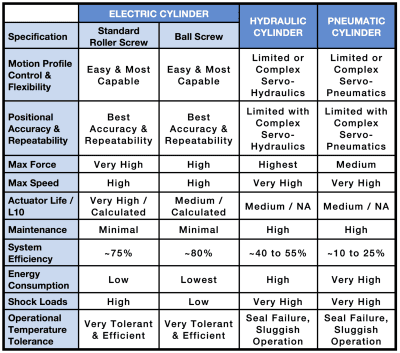
Switching from hydraulic or pneumatic cylinders to electric linear motion systems can improve how a machine controls force, position, speed, and energy consumption. Electromechanical actuators combine precise motion control with integrated feedback and monitoring, helping manufacturers simplify equipment and improve process consistency.
Key advantages include:
- High thrust capability: Electric actuator systems can deliver substantial force for demanding applications, with properly sized systems capable of reaching forces comparable to many hydraulic applications. Motion-control sizing software also simplifies actuator and servo selection.
- Precise force control: Servo-driven electric actuators continuously monitor motor torque, which correlates with actuator force. This allows manufacturers to maintain consistent force throughout a process without frequent adjustments or maintenance.
- Accurate position control: Closed-loop electric systems can achieve multiple programmable positions with fast settling times and high repeatability, often without requiring separate external position sensors.
- Consistent performance across temperatures: Electric actuators are generally less affected by temperature-related performance changes than hydraulic systems. Hydraulic equipment may require heating or cooling to maintain oil viscosity and consistent operation as environmental conditions change.
- Reduced maintenance: Properly sized electric actuators can provide long service life with minimal routine maintenance. Depending on the system, maintenance may be limited to periodic lubrication, without hydraulic filters or fluids that require regular replacement.
- Built-in data and monitoring: Servo-driven electric systems can provide feedback on position, velocity, torque, and other operating parameters. This can reduce the need for additional sensors and complex monitoring equipment.
- Improved energy efficiency: Electric actuator systems typically operate at approximately 75–80% efficiency, compared with approximately 40–55% for hydraulic systems. Higher efficiency can reduce energy consumption and operating costs.
- Reduced risk of fluid contamination: Electric actuators do not require hydraulic fluid, helping eliminate fluid leaks and reducing contamination concerns in applications where cleanliness is important.
Is an Electric Actuator the Right Choice for Your Application?
When evaluating a conversion from pneumatic or hydraulic cylinders, consider whether your current system is limiting precision, flexibility, efficiency, or maintenance. Electric actuators can provide greater control over motion while giving you access to operating data and programmable performance.
Ask yourself:
- Do you need to adjust stroke, force, or speed quickly? Electric actuators allow motion parameters to be programmed and adjusted to match changing production requirements.
- Do you need more consistent positioning and repeatability? Closed-loop electric actuation provides precise motion control, helping deliver the same result from cycle to cycle.
- Would real-time operating data improve your process? Servo-driven electric systems can provide feedback on position, force, speed, and other performance parameters for monitoring and process optimization.
- Are hydraulic fluid leaks a concern? Electric actuators eliminate hydraulic fluid from the actuation system, helping reduce leak-related maintenance, contamination risks, and cleanup.
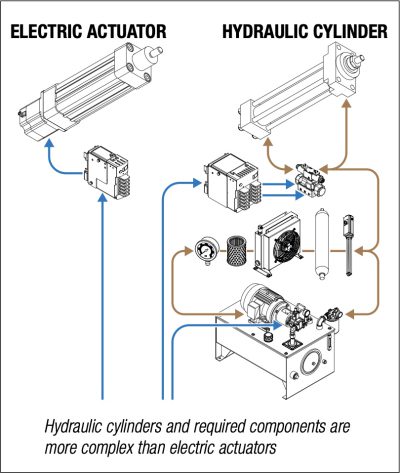
- Would a simpler, lower-maintenance system benefit your operation? Electric actuators can eliminate components associated with hydraulic power systems, including fluid reservoirs, filters, pumps, and hoses.
- Do temperature changes affect your current system’s performance? Electric actuators can provide more consistent operation across changing ambient temperatures without relying on hydraulic fluid viscosity to maintain performance.
Reduce Total Cost of Ownership with Electric Actuators
Converting from hydraulic or pneumatic cylinders to electric actuators can reduce the long-term cost of operating and maintaining a machine. While the initial equipment cost depends on the application, electric systems can provide savings through improved efficiency, reduced maintenance, fewer supporting components, and better process monitoring.
Key factors that can affect total cost of ownership include:
- Fewer system components: Hydraulic and pneumatic systems require supporting equipment such as pumps, compressors, reservoirs, valves, filters, hoses, and fittings. Electric actuator systems can simplify machine architecture and reduce the number of components that need to be purchased and maintained.
- Smaller overall system footprint: While individual hydraulic and pneumatic cylinders can be compact, the complete system also requires power units and supporting components. Electric actuation can help reduce the overall equipment footprint and create more flexible machine layouts.
- Predictable service life: Electric actuators can be selected using factors such as dynamic load ratings and L10 life calculations, helping engineers size components around application requirements and expected operating cycles.
- Higher energy efficiency: Electric actuator systems typically operate in the 75–80% efficiency range, compared with approximately 40–55% for hydraulic systems. Actual efficiency varies by system design and operating conditions, but higher efficiency can reduce energy consumption.
- Lower utility costs: Improved efficiency can reduce the electricity required to produce motion compared with hydraulic or pneumatic power systems, potentially lowering ongoing operating costs.
- Reduced maintenance: Electric actuators eliminate many maintenance requirements associated with hydraulic and pneumatic systems, including fluid changes, filtration, and seal-related maintenance. Proper actuator sizing and application-specific lubrication requirements should still be considered.
- Reliable operation across temperature ranges: Electric actuators can be configured with lubricants and components suited to the operating environment, helping maintain consistent performance across a range of temperatures.
- No hydraulic fluid leaks: Replacing hydraulic actuation eliminates hydraulic fluid from the actuator system, reducing the potential for leaks, cleanup, product contamination, and environmental concerns.
- Integrated process data: Servo-driven electric actuators can provide position, velocity, torque, and force-related feedback to the machine control system. This data can help manufacturers monitor processes, identify changes in performance, and improve quality control.
How to Select the Right Electric Actuator Replacement
Once you decide to replace a hydraulic or pneumatic cylinder with an electric actuator, proper sizing is essential for achieving the required force, speed, stroke, positioning accuracy, and service life. Selecting the right actuator and servo components can help ensure reliable performance while avoiding unnecessary equipment costs.
When evaluating a replacement, consider application requirements such as:
- Required force or thrust
- Stroke length and available mounting space
- Operating speed and acceleration
- Positioning accuracy and repeatability
- Duty cycle and expected service life
- Environmental and temperature conditions
- Motor, drive, and control requirements
Use the Tolomatic sizing tool to help identify an electric actuator configuration based on your application requirements. For more complex applications, the All Air team can help evaluate your existing cylinder system, determine the required specifications, and identify an electric actuator solution suited to your equipment.
Product Lineup
Tolomatic electric rod actuators provide dependable linear motion solutions for a wide range of industrial automation applications, from cost-effective designs to high-performance precision systems. These electric cylinders are engineered to deliver smooth, repeatable motion with consistent control in demanding production environments.
Designed for flexibility and easy integration, Tolomatic rod-style actuators support a variety of machine configurations where accuracy, efficiency, and long service life are essential.
- Wide range of electric rod actuator and cylinder options
- Available from low-cost to high-performance models
- Smooth and repeatable linear motion control
- Designed for precision positioning applications
- Easy integration into existing automation systems
- Suitable for high-duty cycle industrial environments
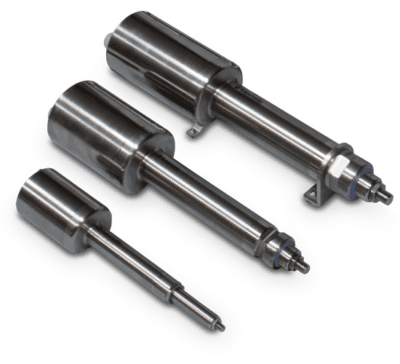
Rodless Electro-Mechanical Actuators for Flexible Linear Motion Systems
Tolomatic rodless electro-mechanical actuators deliver efficient, space-saving linear motion for a wide range of industrial automation applications. Available in both screw-driven and belt-driven designs, these actuators provide smooth, precise travel control with flexible mounting and configuration options to suit diverse machine requirements.
Engineered for performance and adaptability, Tolomatic rodless actuators support multiple bearing styles and configurations, making them ideal for applications that require long travel lengths, high speed, and reliable repeatability in compact automation layouts.
- Rodless design for compact machine integration
- Available in screw-driven and belt-driven configurations
- Multiple bearing styles and mounting options
- Smooth, precise linear motion control
- Suitable for long travel applications
- High-speed and high-repeatability performance
- Designed for flexible industrial automation systems
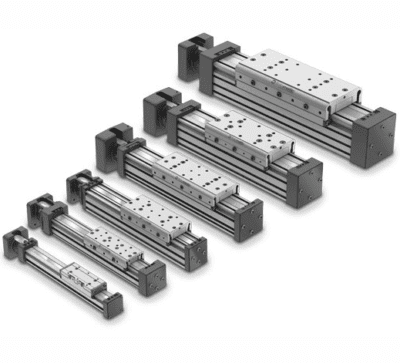
ServoWeld® Resistance Spot Welding Actuators for High-Force Robotic Welding
Tolomatic ServoWeld® GSWA Series servo actuators are designed specifically for resistance spot welding applications in robotic and automotive manufacturing environments. By combining high-force linear actuation with advanced servo motor technology, these systems deliver precise control, faster weld cycles, and a compact design optimized for high-speed production lines.
Ideal for automotive body-in-white applications, ServoWeld® actuators improve weld consistency, reduce cycle times, and support demanding high-duty robotic welding operations where precision and repeatability are critical.
- Servo-driven high-force actuator design
- Optimized for robotic resistance spot welding
- Compact profile for tight robotic integration
- Faster weld cycles for improved production efficiency
- High precision force and position control
- Ideal for automotive body-in-white applications
- Designed for high-duty cycle industrial environments
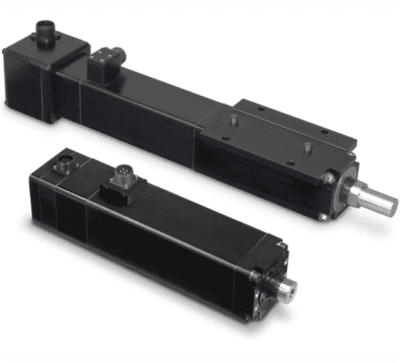
Motors & Drives for Integrated Servo and Stepper Motion Control
Tolomatic motors and drives provide flexible, high-performance motion control solutions for a wide range of industrial automation applications. Designed for simplicity and reliability, these systems include servo and stepper motors, drives, and controllers, as well as fully integrated servo motor/drive/controller units for streamlined installation and operation.
The ACSI Basic Integrated Servo Motor/Drive/Controller combines key motion control components into a compact, easy-to-use solution, helping reduce wiring complexity, simplify setup, and improve system efficiency in demanding automation environments.
- Servo and stepper motors, drives, and controllers
- Integrated servo motor/drive/controller options available
- Compact all-in-one motion control design
- Simplified installation and reduced wiring complexity
- Flexible control for a wide range of automation systems
- Designed for reliable industrial performance
- Supports precise positioning and motion control applications
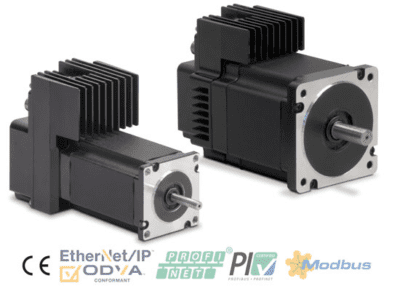
Have a Challenge? Let’s Find the Right Automation Solution.
Need help replacing a component, improving machine performance, or choosing the right product for your application? All Air Inc. helps customers solve pneumatic automation, motion control, sensing, machine safety, robotics, and industrial equipment challenges with trusted manufacturer partnerships, technical product knowledge, and responsive application support.